Material History
Material as witness
The Temple of Bel
This drawing began as an immediate response to the 2015 destruction of the Temple of Bel in Palmyra, Syria, and was completed in 2026. Working from a photogrammetric 3D model pioneered by the University of Applied Sciences and Arts Switzerland, I simulated the temple’s collapse digitally and then back‑drew selected frames in ink. The process became a way of placing myself inside the moment of destruction, as a meditation on how we witness, remember, and locate ancient places within our own time.
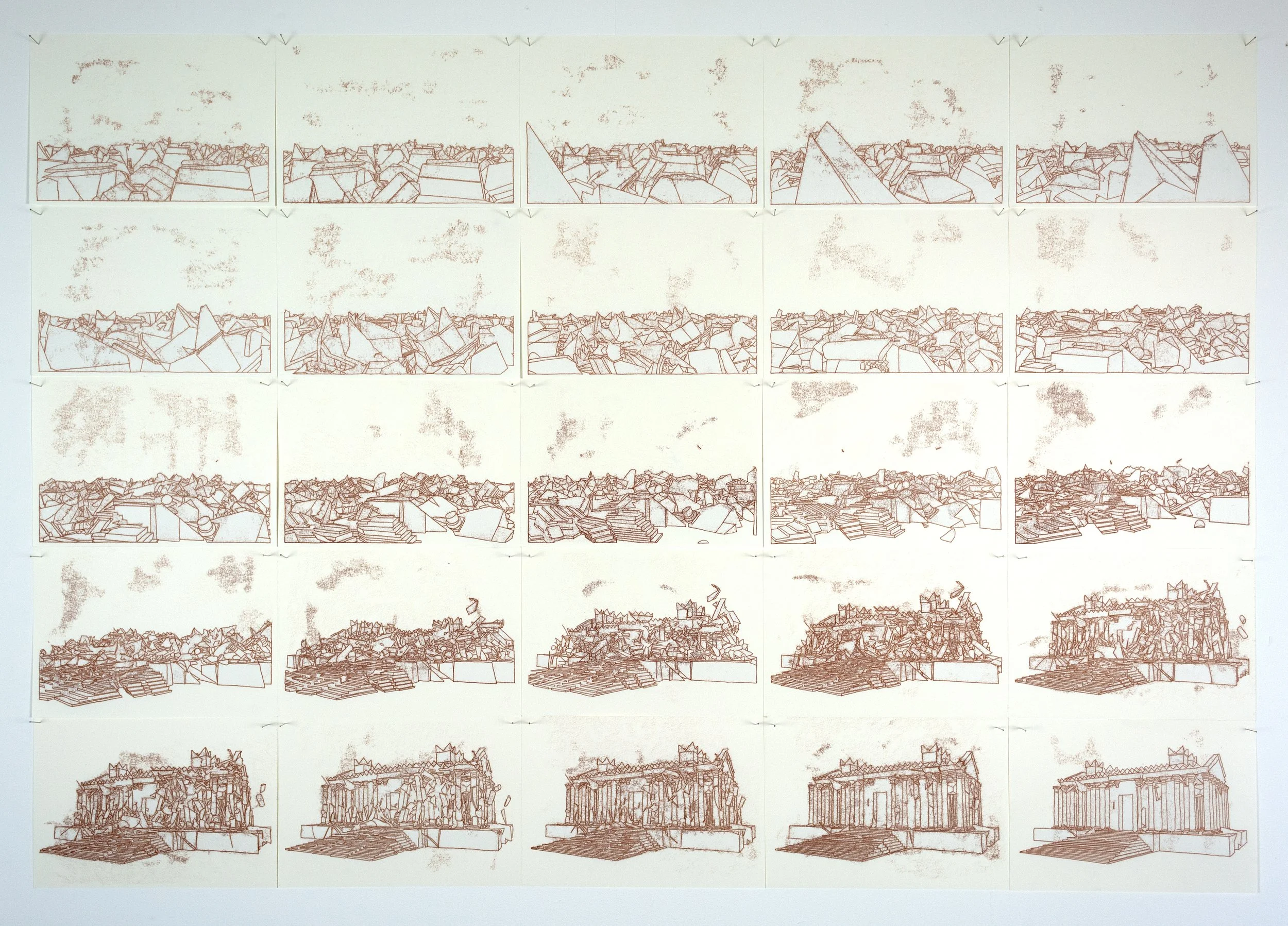
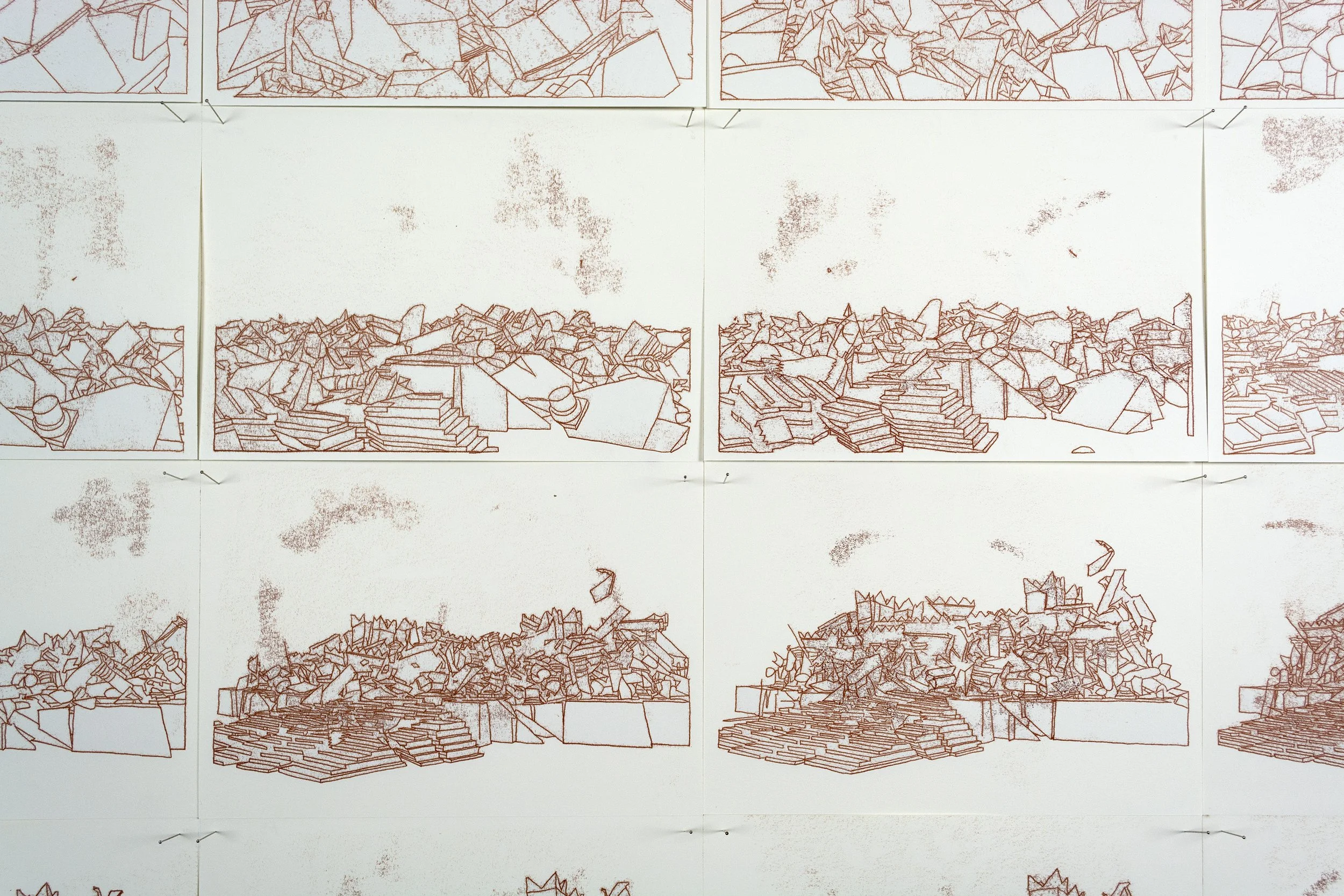
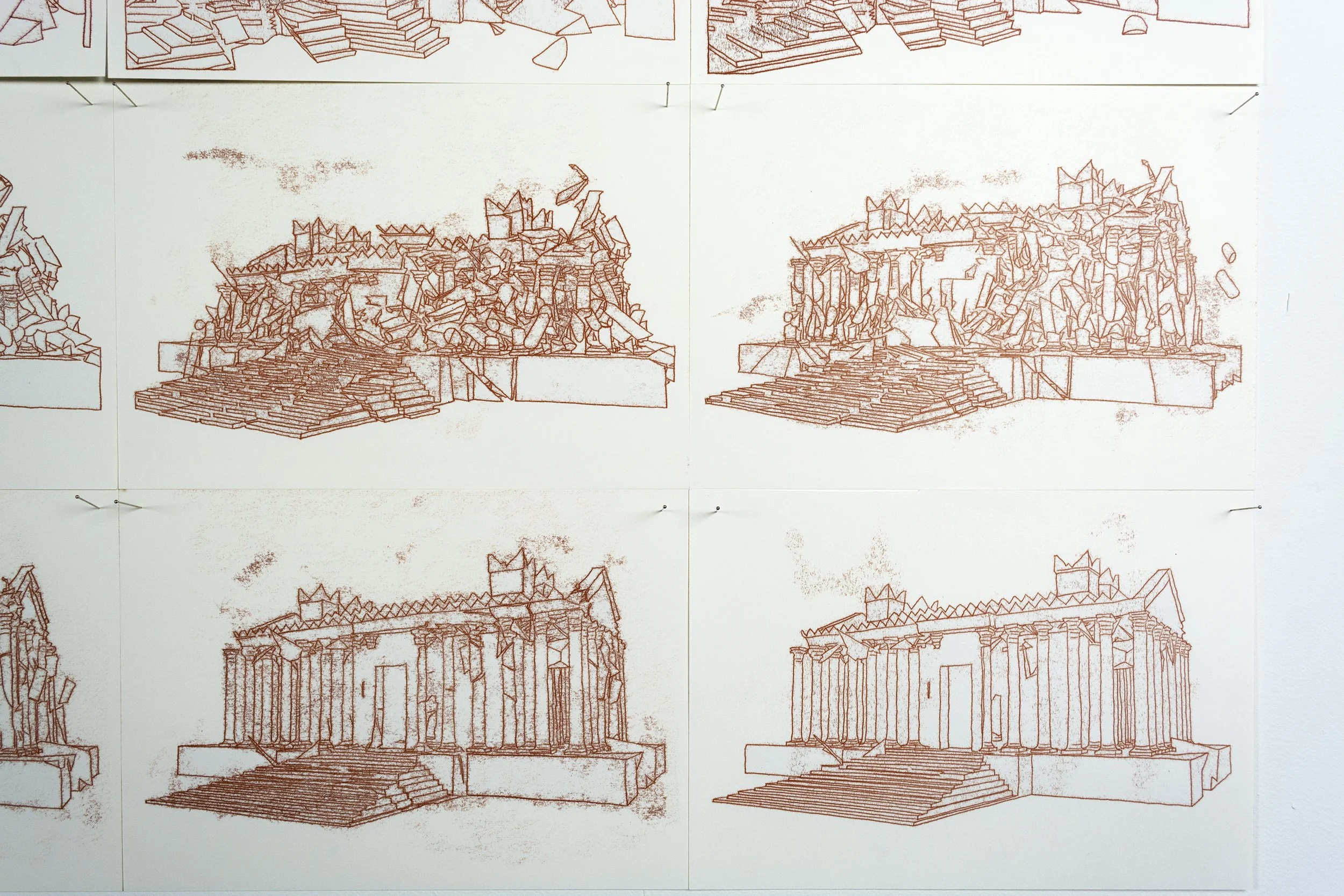
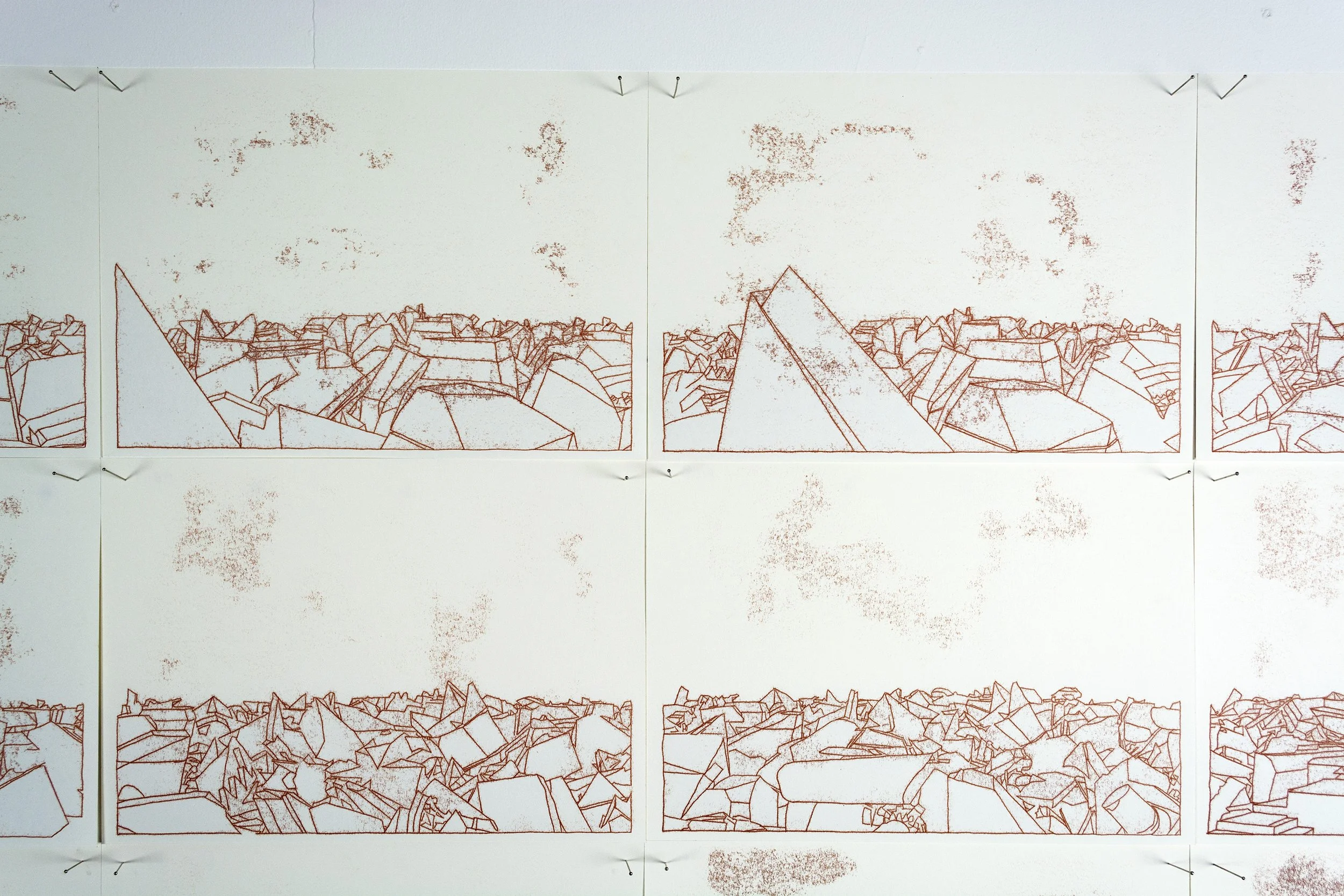
Reversing the sequence and arranging the drawings as a field created a deliberate rupture, echoing archaeological grids and the deep human lineage of the site. Palmyra’s position between Mediterranean and Eastern worlds, a place shaped by intersecting cultures and shifting dominions, lends the work a historical charge.
The digital reconstruction, the simulated collapse, and the act of drawing form a cycle of understanding: not only of the building itself, but of its end point and its renewed presence. The work becomes a meditation on destruction, memory, and re‑materialisation.
The drawing lay dormant after its initial inception in 2016, archived away in a box. Its re‑emergence came only after time and distance allowed me to recognise it as a ritual, a flickering material history that I was finally ready to resolve and understand.
Rapparee - commission for the Centre for Material Thinking
The cove of Rapparee in the town of Ilfracombe holds the moment the Transport Ship ‘The London of London’ ran aground in the 18th Century carrying the spoils of the French Revolutionary war from St Lucia. The tragic event has left traces of evidence held within the geomorphology of the coastline. My process of investigation will transform the information left in the cove to understand how disappearance can become emergent and matter not escaping can become manifest.

‘Vessel’, fired stoneware, steel, sand, stone, site-specific object formed from the matter of Rapparee, June 2022
‘Breathe’ Grave and Cliff Rapparee, animated digital scan, June 2022
About the Commission
Rapparee was a research-led commission exploring the layered histories of Rapparee Cove in Ilfracombe, a site shaped by shipwrecks, trade, migration and local folklore. My approach combined archival research, oral histories and material enquiry, gathering geological residues, coastal sediments and historical fragments to build a narrative that moved between fact, fable and lived memory. The project resulted in a digital artefact that wove together research, images and field recordings, alongside a series of ceramic works that responded to the site’s shifting histories and material traces.

Video still from site specific circle drawing using yellow stones ‘flint’ from the ballast of ‘The London’, June 2022
The digital residency for the Centre for Material Thinking was an opportunity to archive my creative process in response to this site. The use of digital and physical media will consider the cove as phenomena, where the interconnections of matter will form an assemblage, animating within the present as part of a vital material process.
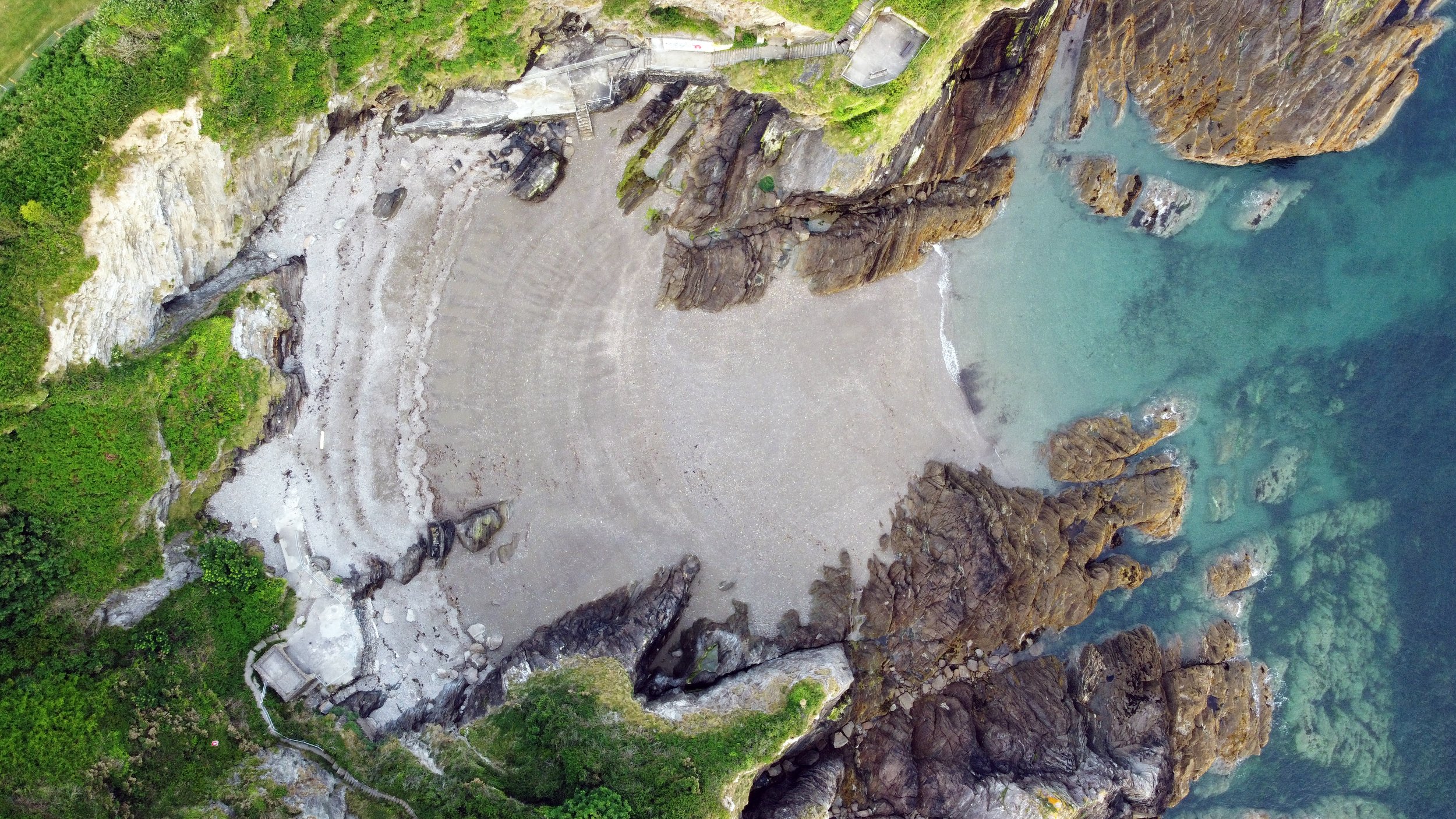
The mouth of the cove, Rapparee, June 2022
Assemblage and Site
Dig, connect, embed, sculpt, carve, morph and entwine all describe something of my creative process that seeks to engage with site. A non-linear history, a geological formation, a lateral slice through time and place. I continue forming connections between sculpture and ceramics, between the technological and magical structures, the actualities of those pauses that lead to the construction.
I’m interested in how a process of making can describe a morphology of matter-information as an ebb and flow of forces impacting the work, using events as a starting point from the past and finding their way to the present.
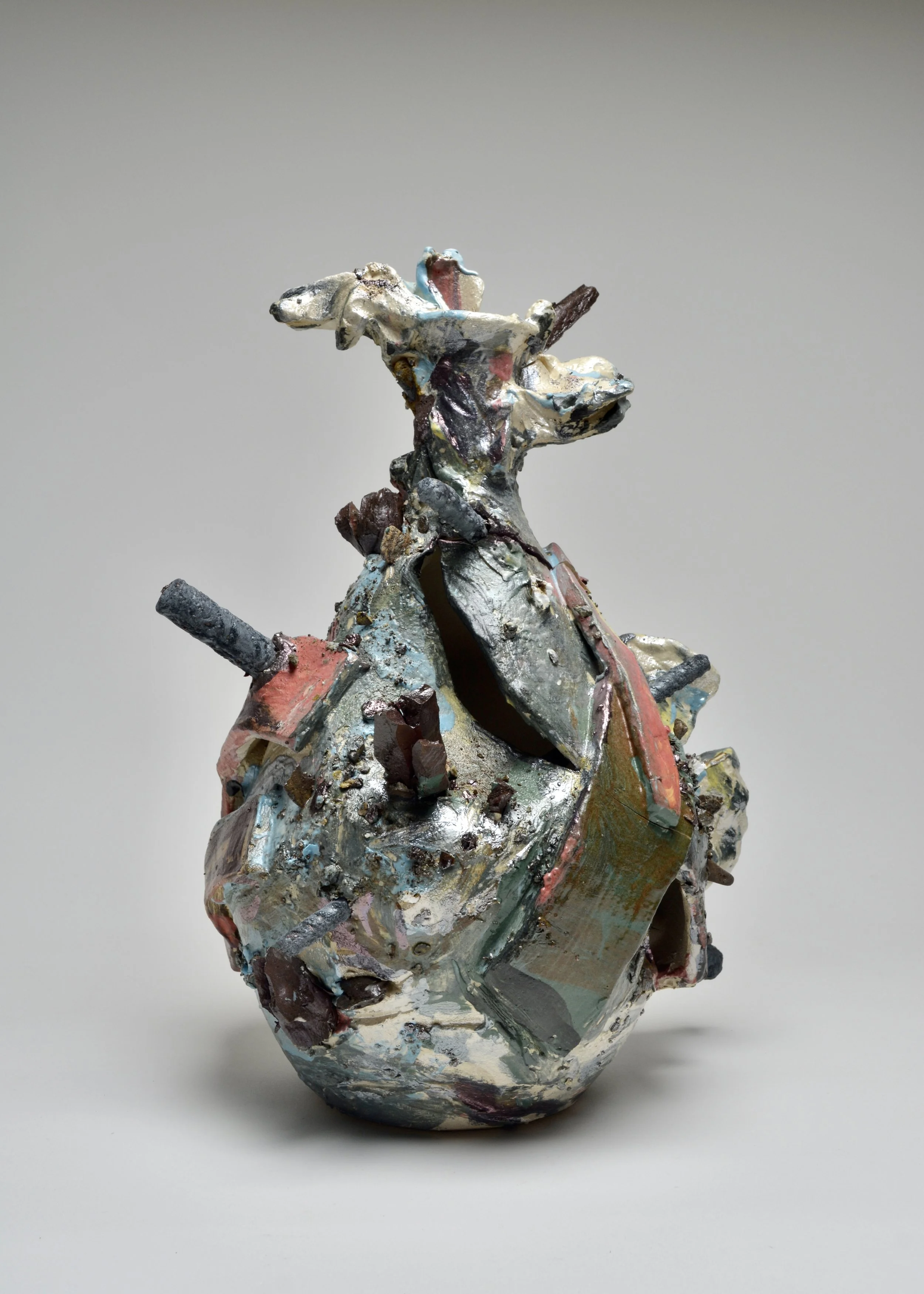
'The Giant's Well', stoneware, steel, iron ore, quartz rock, sand from Marizion Cornwall, H 33cm x W 25cm x D 25cm, 2023
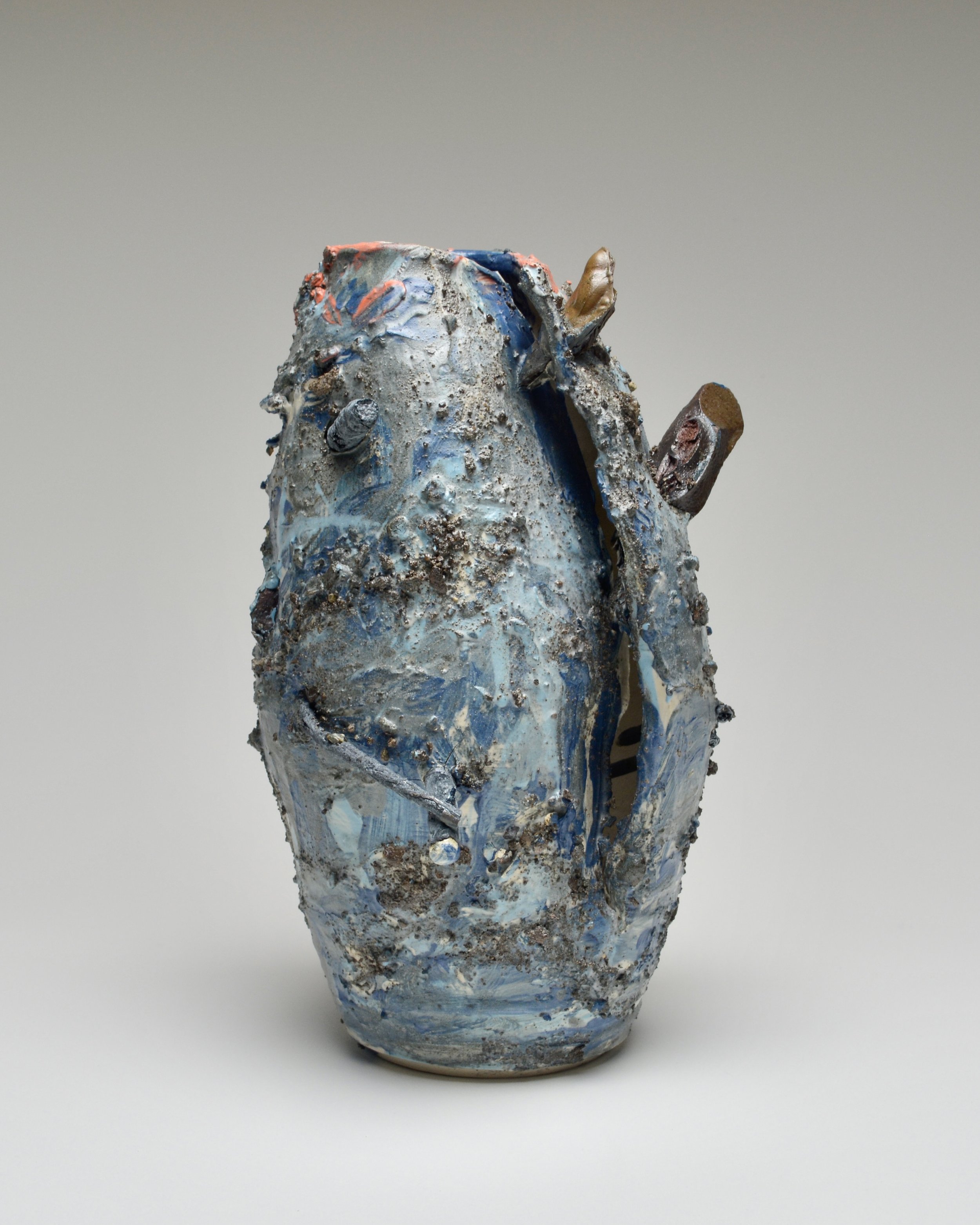
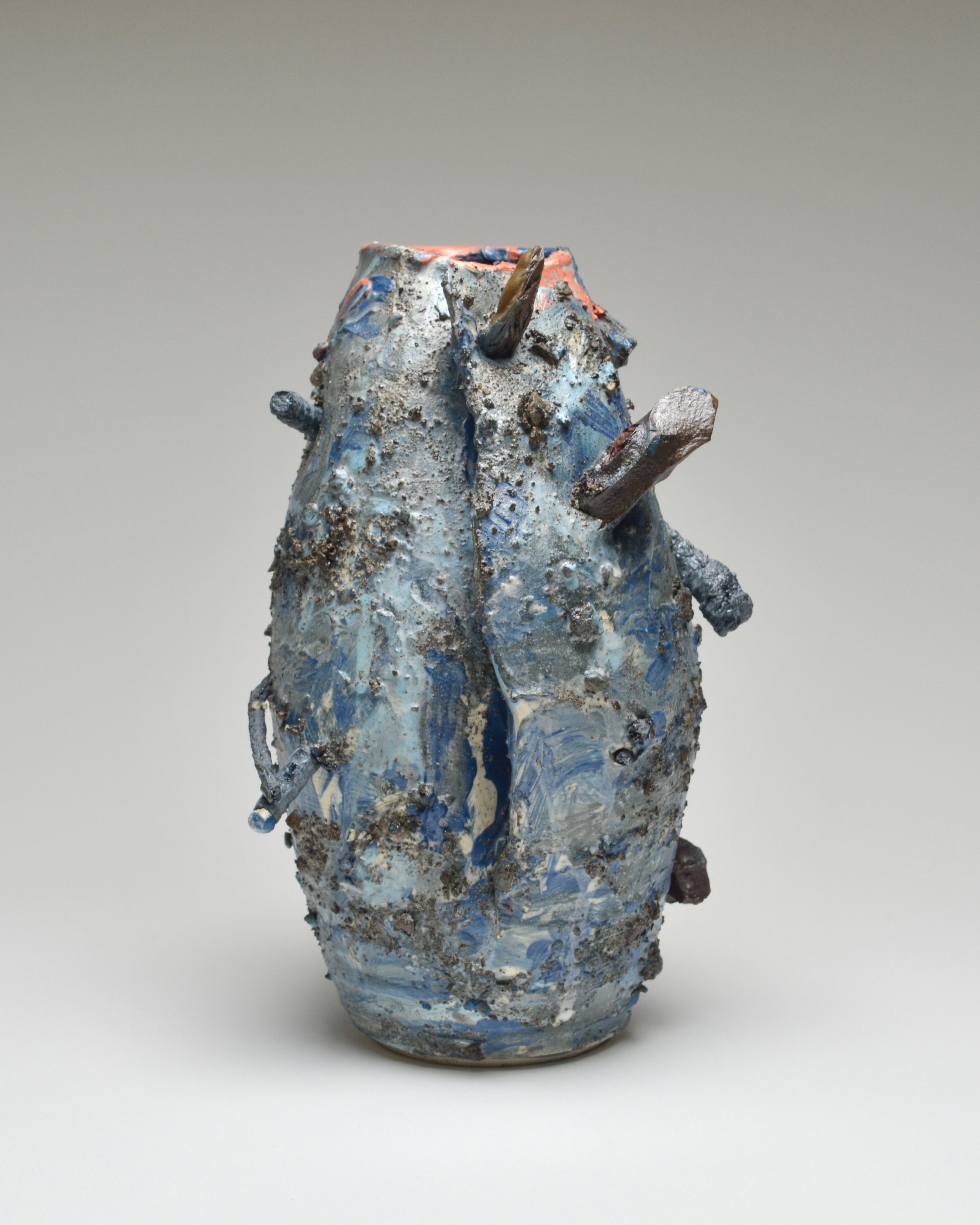

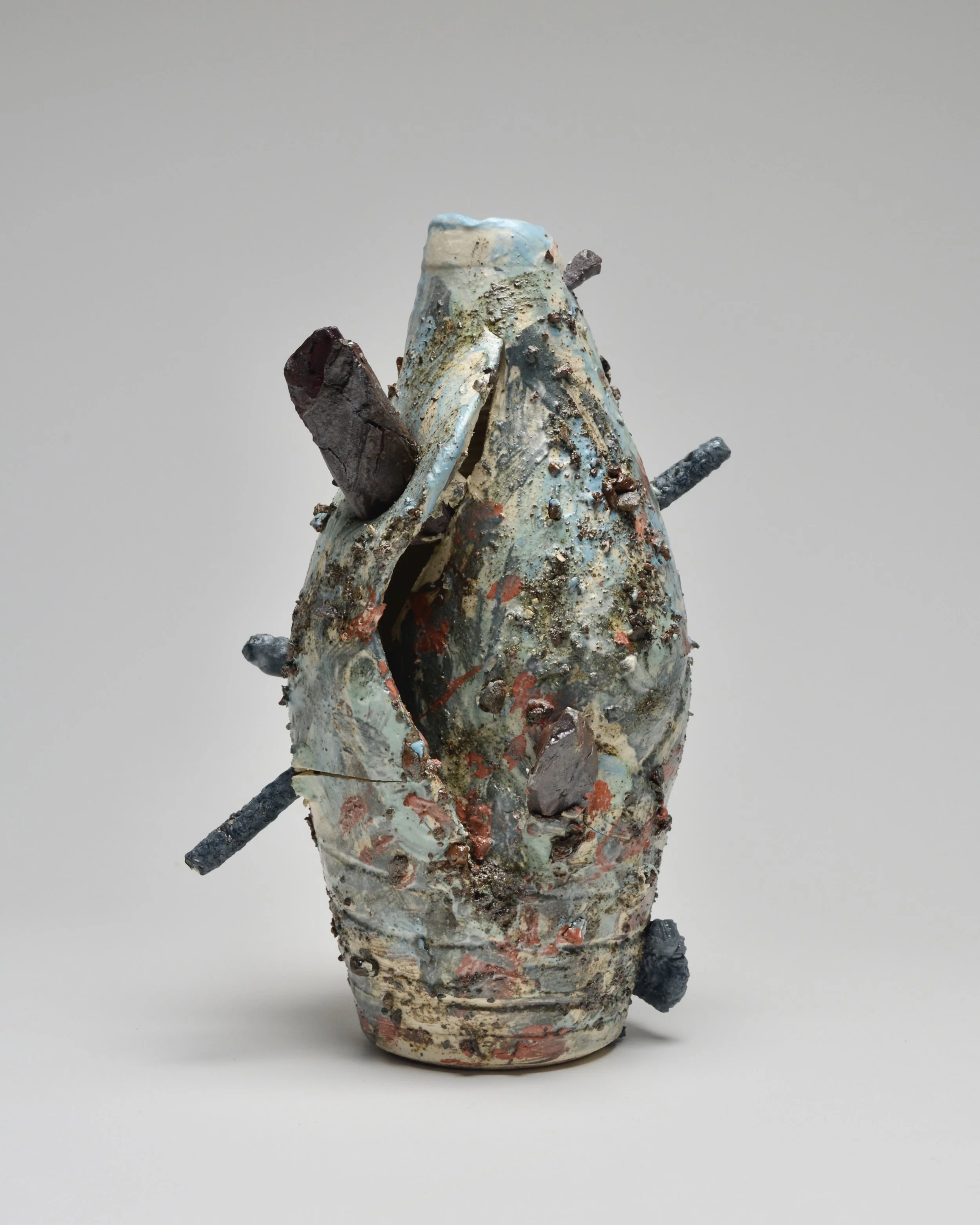
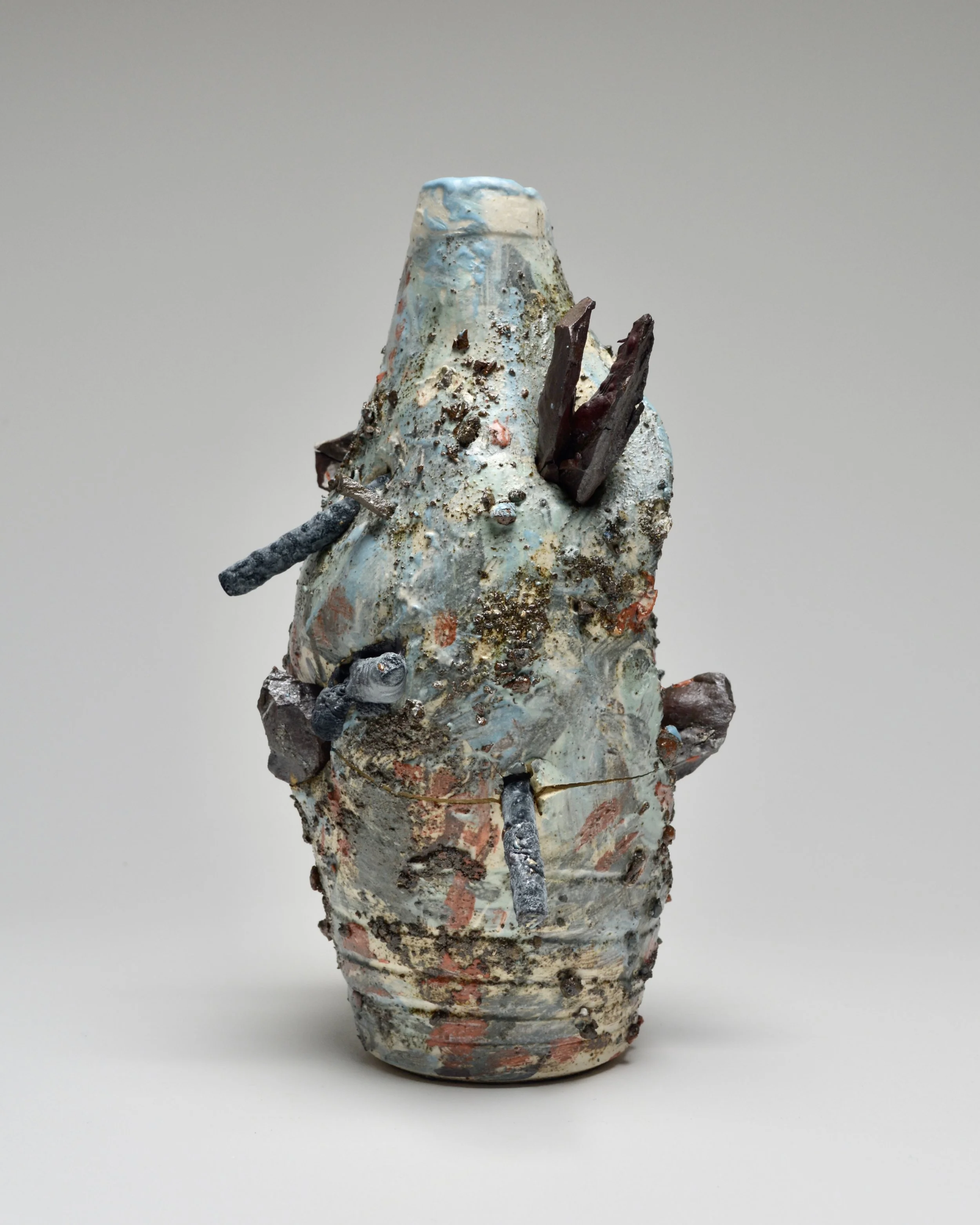
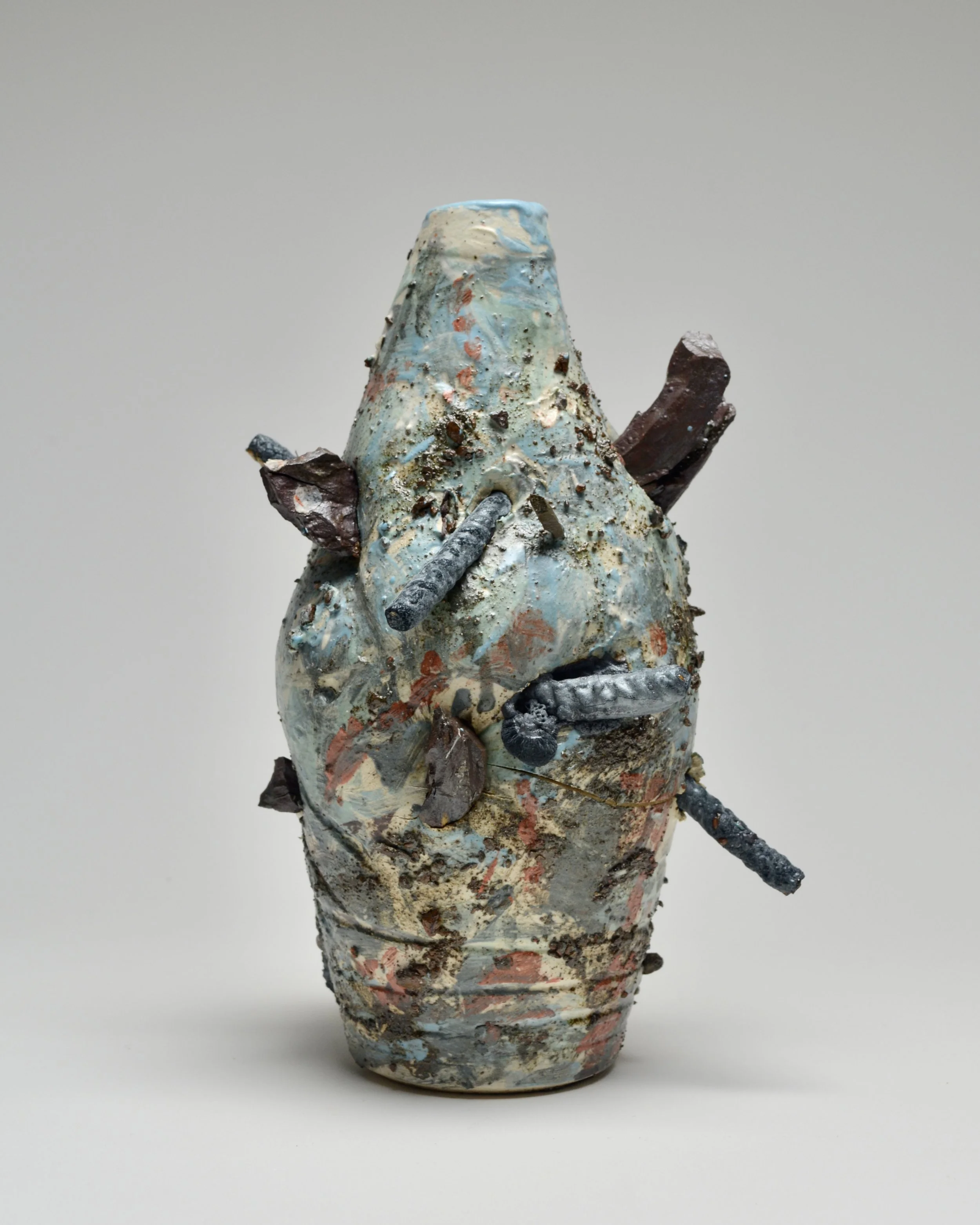


These vessels bring together the sculptural formation of an artefact, where found minerals and metals from the North Devon coastline are impacted into the surface of the stoneware body.
