Myth and Materiality
“My work explores myth, materiality, and the psychological residue of form through sculpture, drawing, and assemblage.”
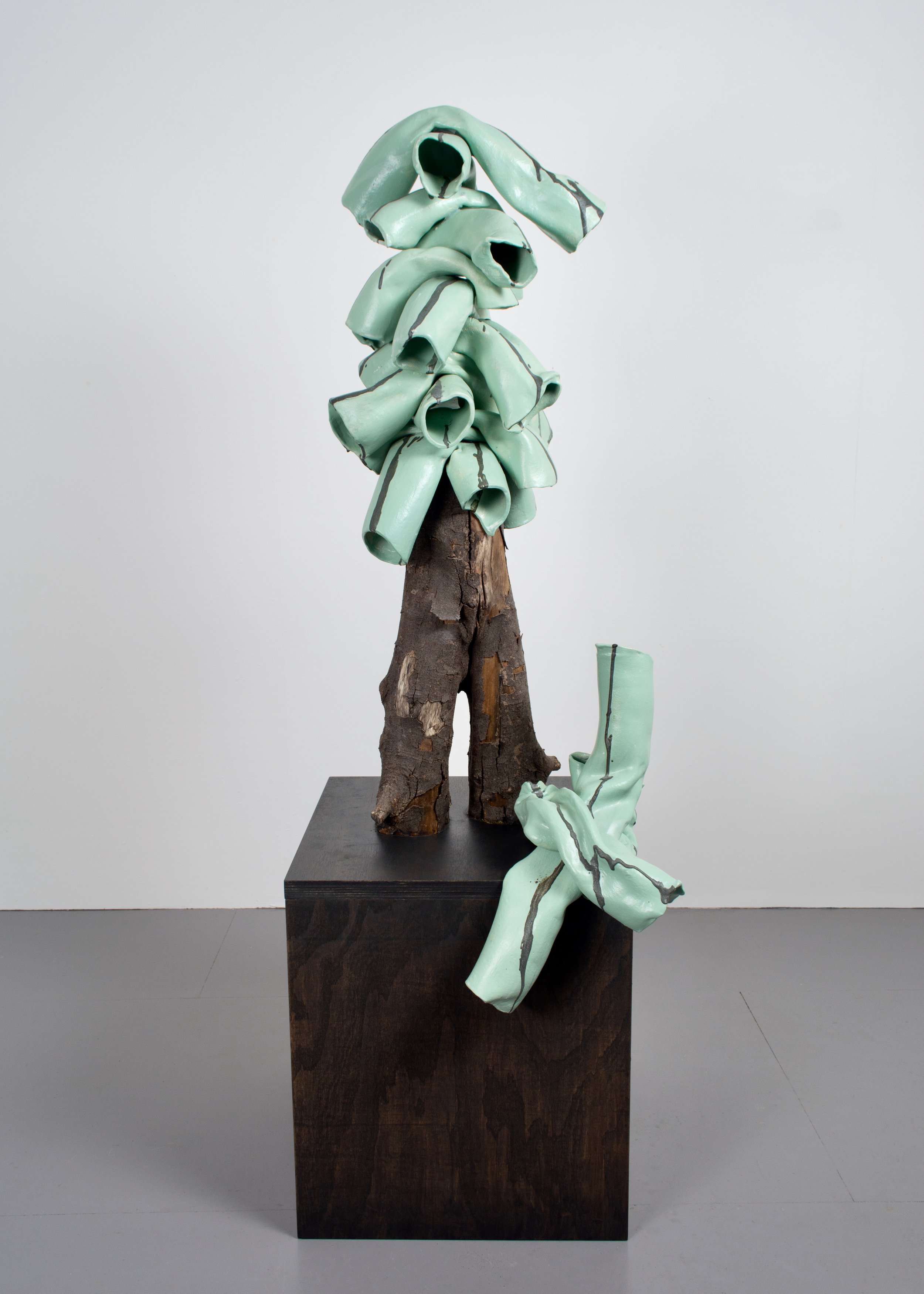
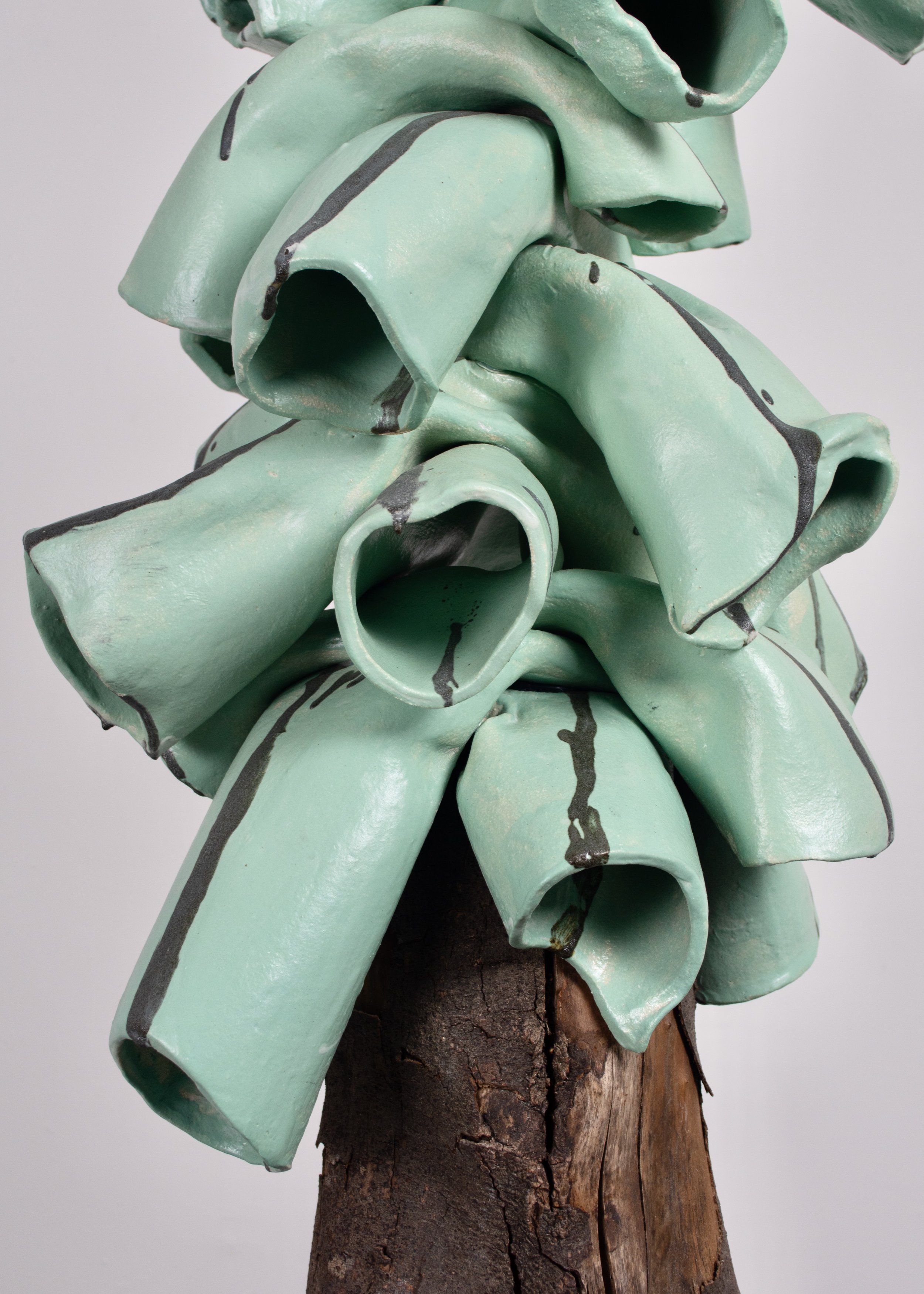
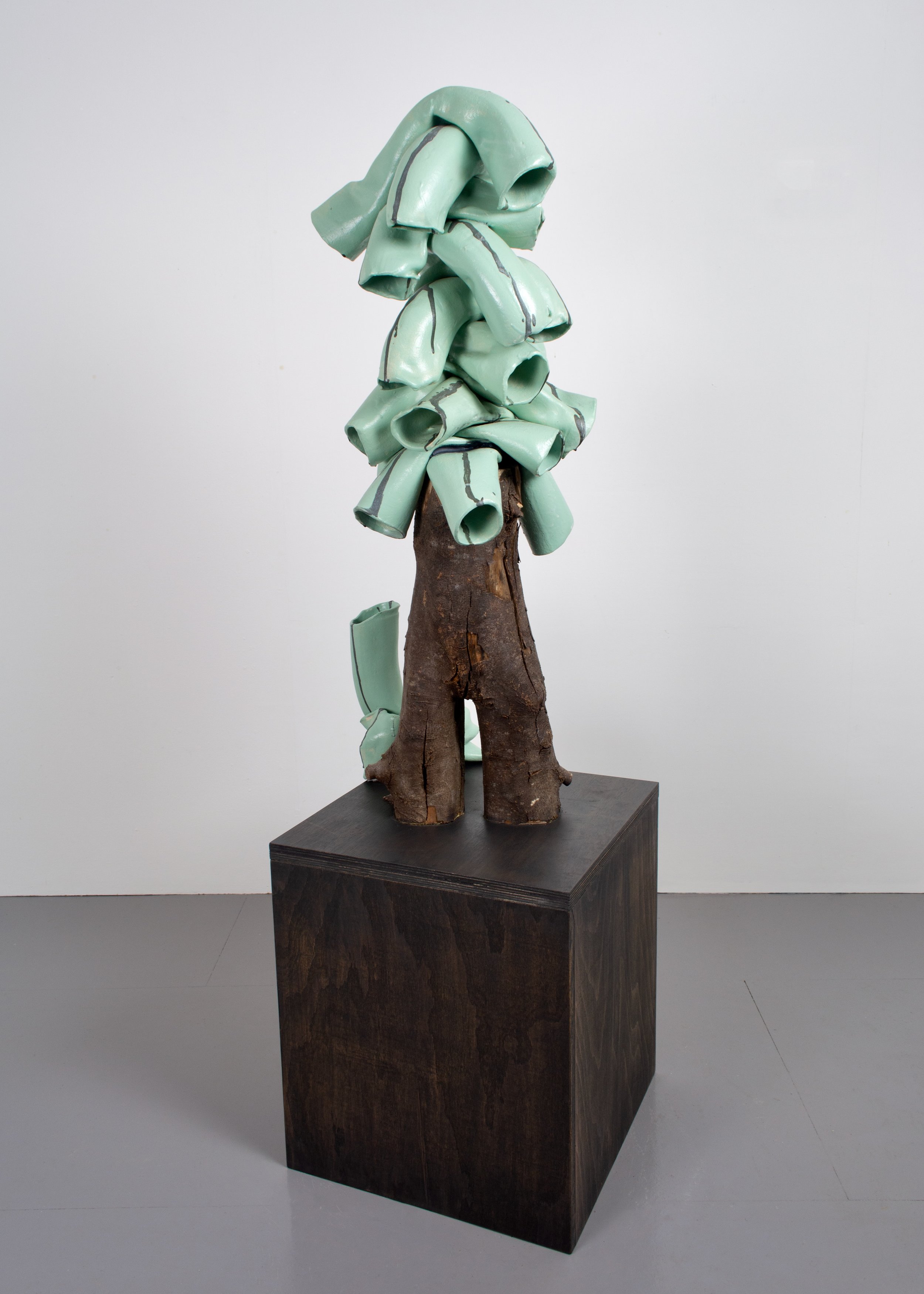
'Cormelian', Stoneware, Hawthorn, Birch plywood, H 150cm x W 52cm x D 54cm, 2023
The writer and activist Rebecca Solnit has written that to walk in the world, you can 'find what you don't know you are looking for.' You discover when you walk that it emancipates you from space and time, which perhaps is demonstrated by Doug Burton's sculpture. The shape has strong figurative overtones: it has legs, after all. To describe it as a figure would be to go too far. Instead, 'Cormelian' is a composite - of materials and shapes, and thus of origins. It looks constructed, with cut blocks but also with curved, organic, green elements, it may be part-human and part-tree. So the imagination takes off on an imaginative journey of speculation. Its title suggests an adjective that people in West Cornwall might recognise as echoing the name Cormoran. The biggest of giants, he lived in the forest where birds, animals and probably humans cohabited before the flood came to cover it with Mount's Bay.
Martin Holman ©2023
Cormelian explores how landscape, folklore and material processes intertwine to shape our understanding of place. The piece emerges from an assemblage of parts: a found tree branch becomes a pair of legs, while extruded clay cylinders grow from the stump, creating a hybrid form that sits between human, tree and mythic figure. The work draws on the folklore of West Cornwall, particularly the stories of ancient giants, using these narratives as a way to think about how histories, real and imagined, inhabit the land.
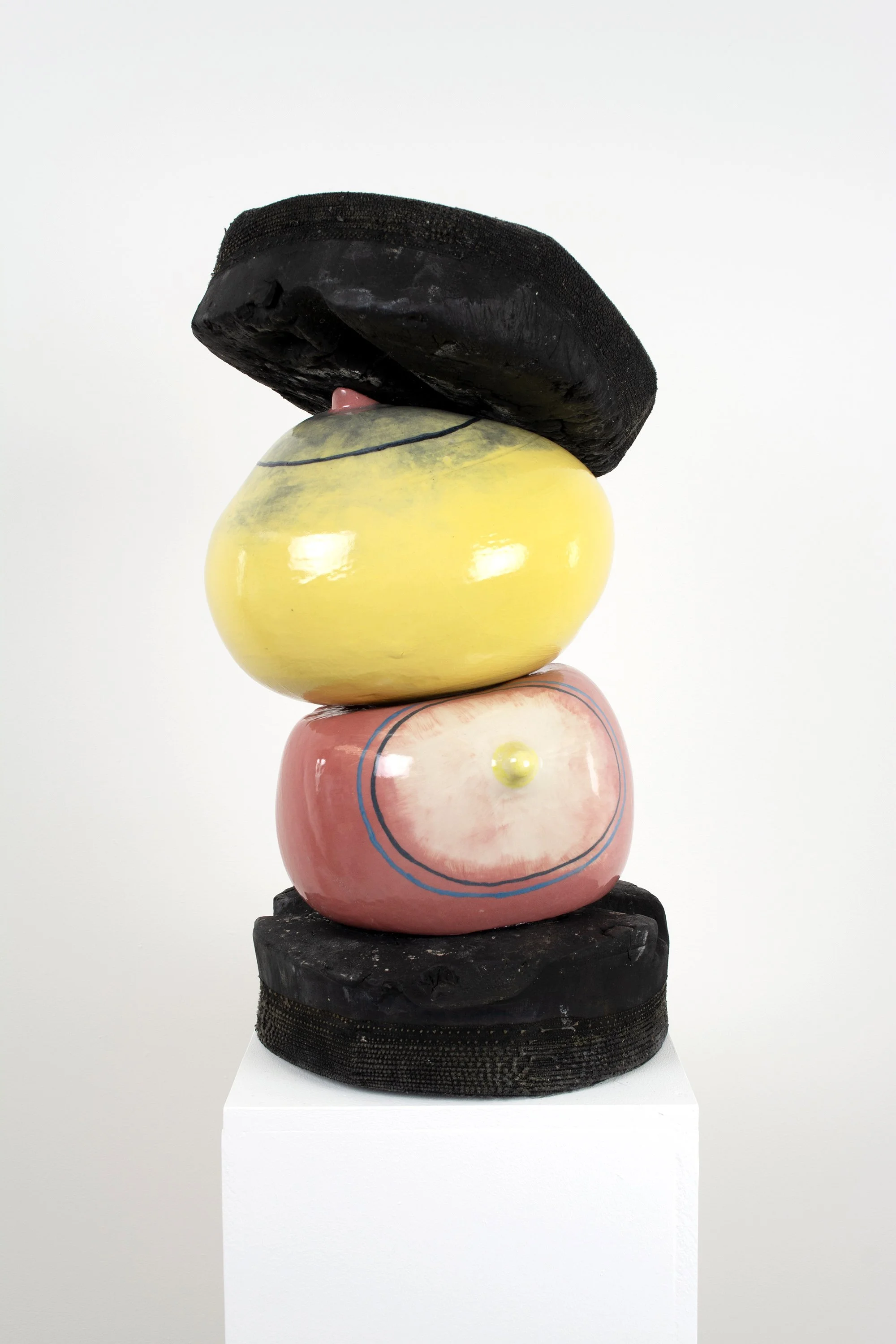
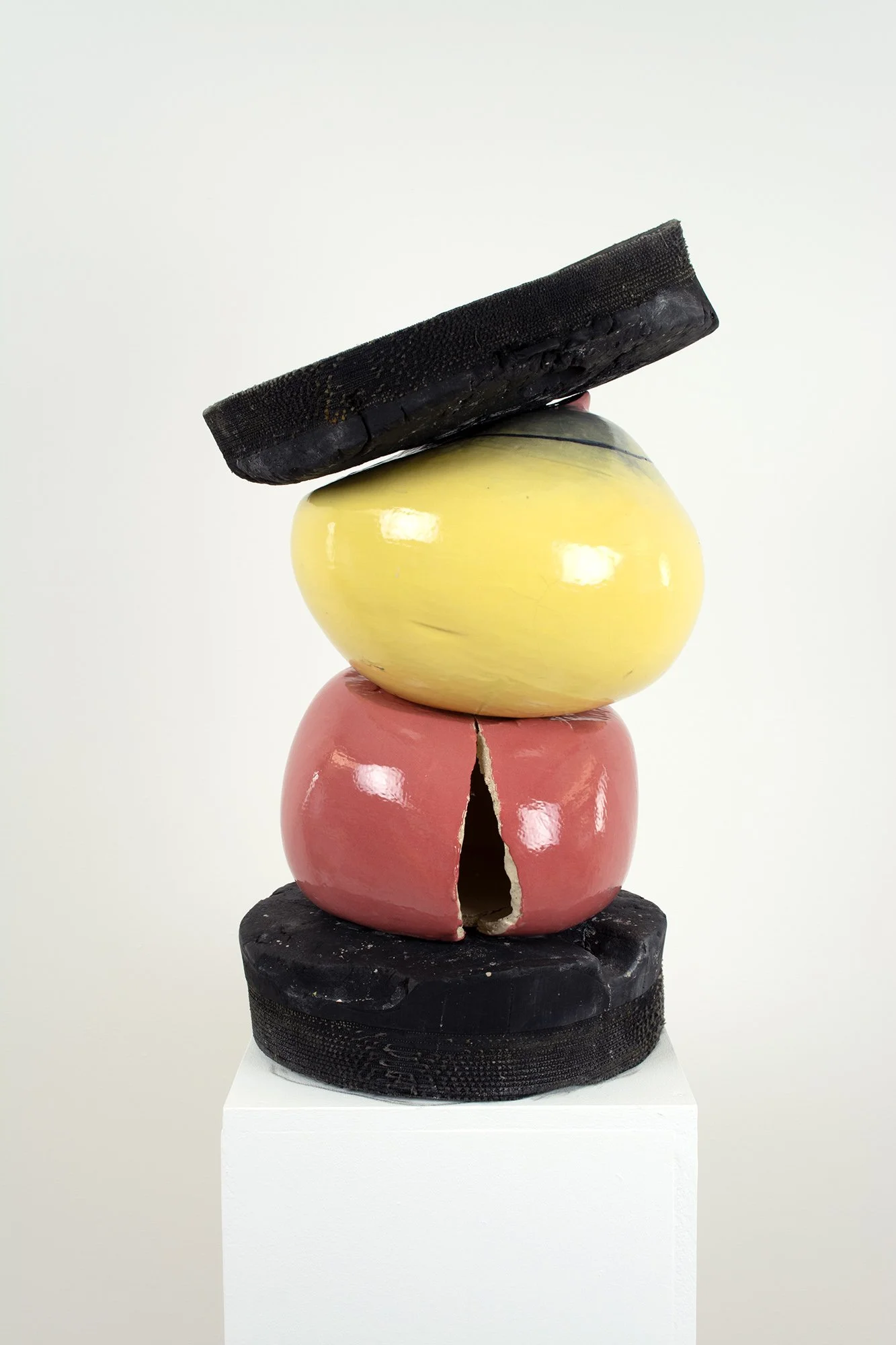
Bollard, Stoneware ceramic, H65 x W28 x D28cm, 2026
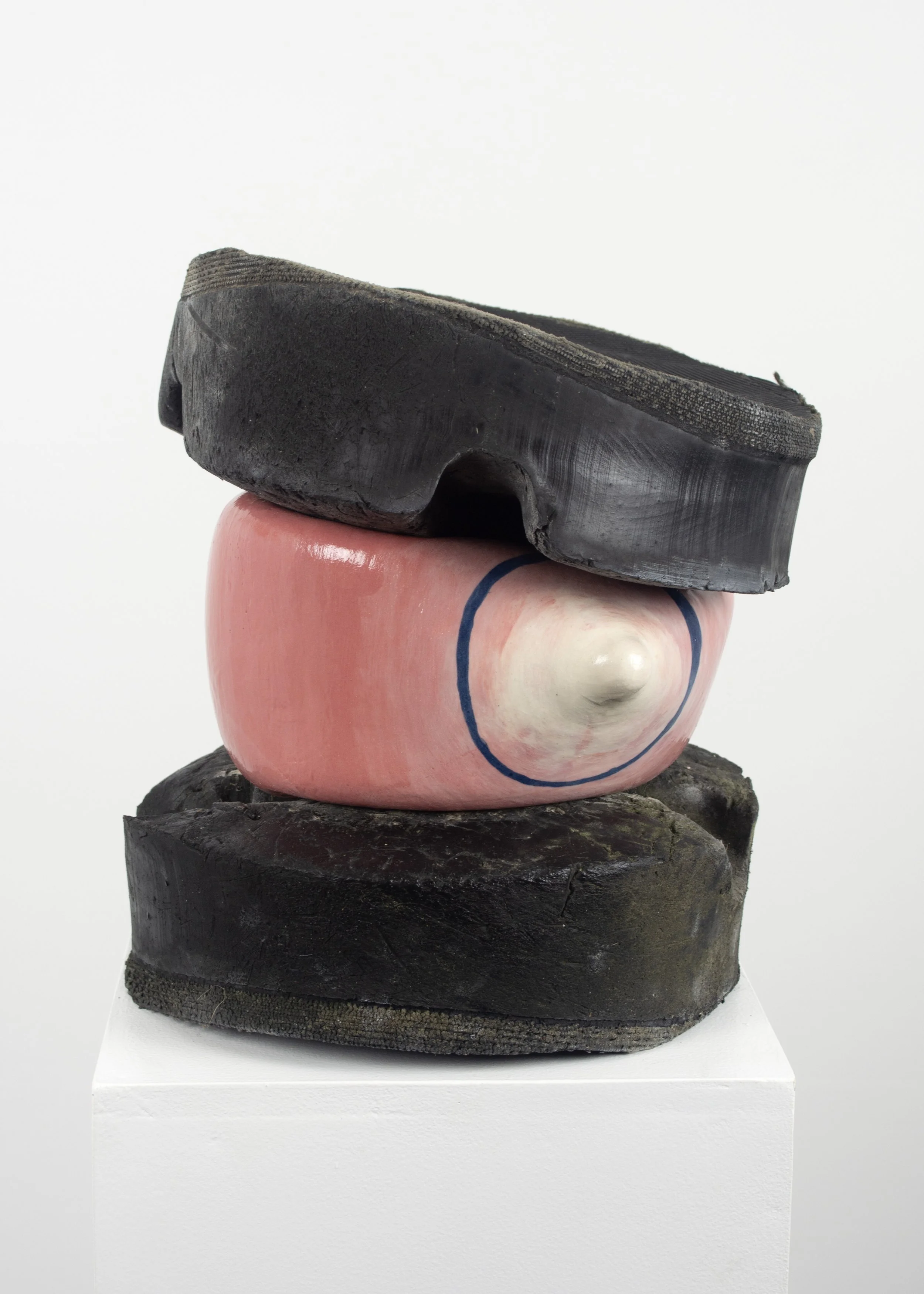
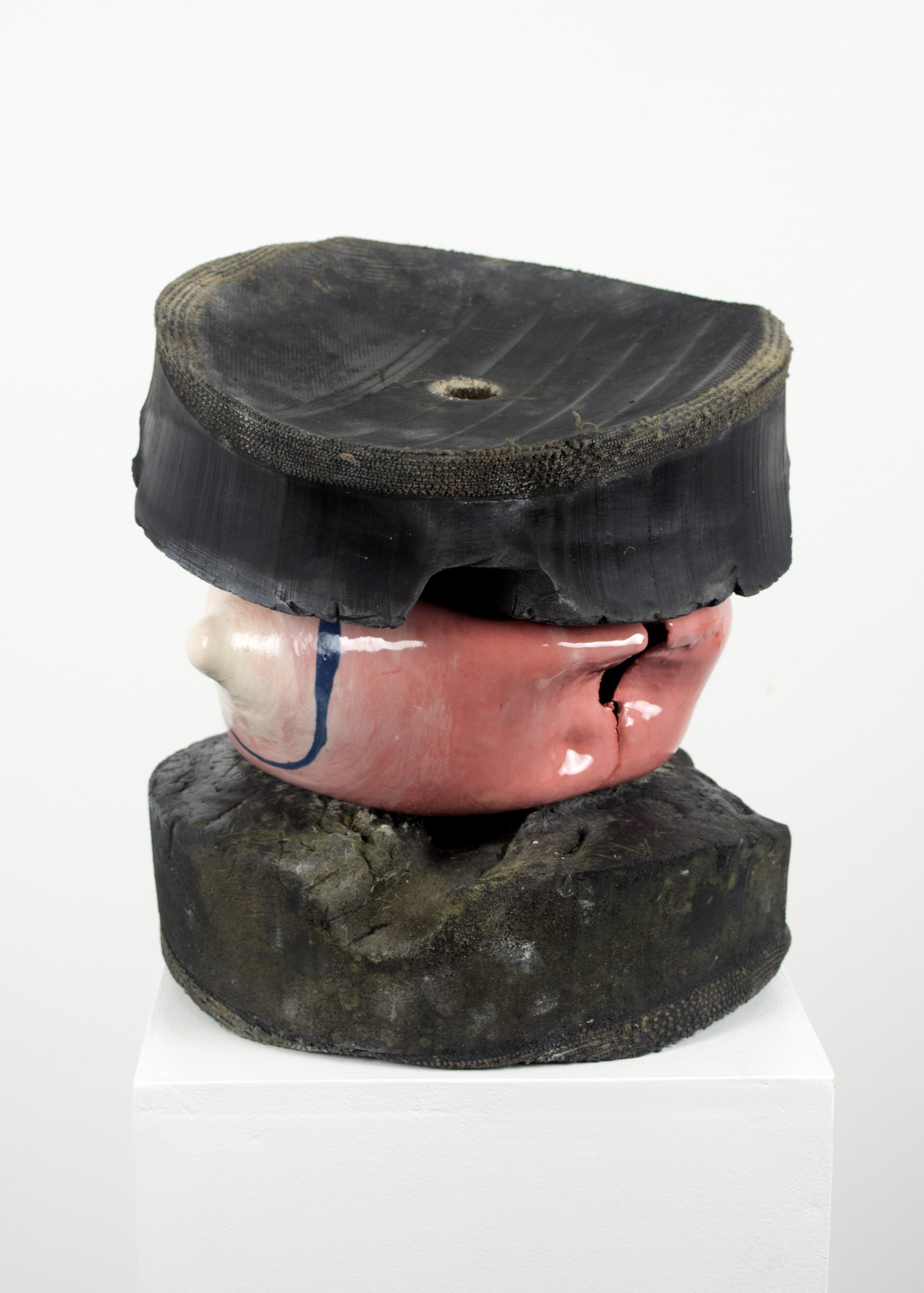
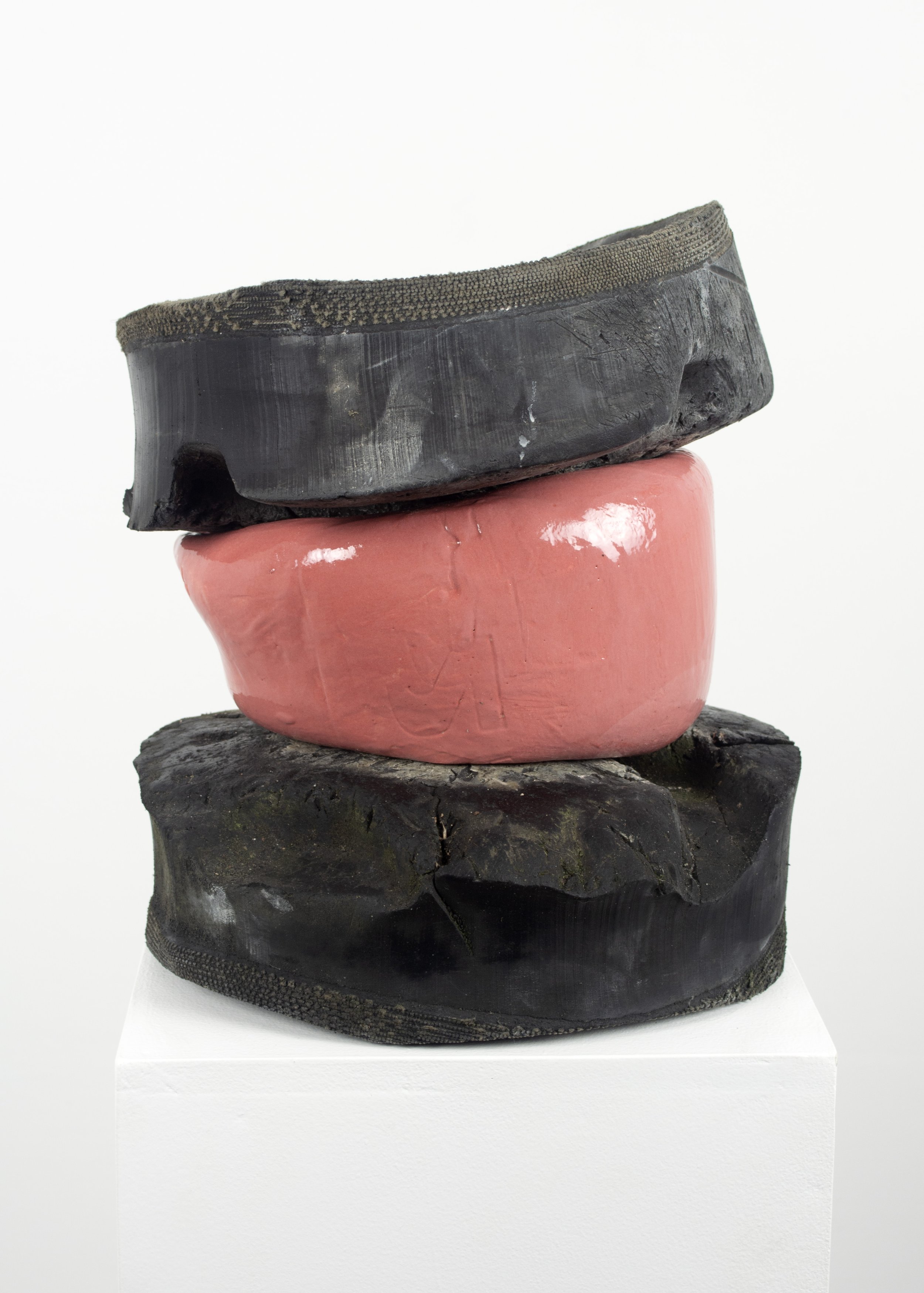
'Pressé', Stoneware ceramic, bottom trawler tyres, H25 x W25 x D30cm, 2024
Karawan
These nomadic sculptures form an ongoing body of work exploring movement, home and the emotional terrain of belonging through the assemblage of ceramic forms. The title plays on ‘Kârvân’, the Persian root of “caravan”, reflecting my own varied cultural heritage and the idea of objects travelling together across landscapes. Each piece is hand‑formed in clay and finished with iron oxide, giving the surfaces a warm, tactile quality that suggests both wear and care.
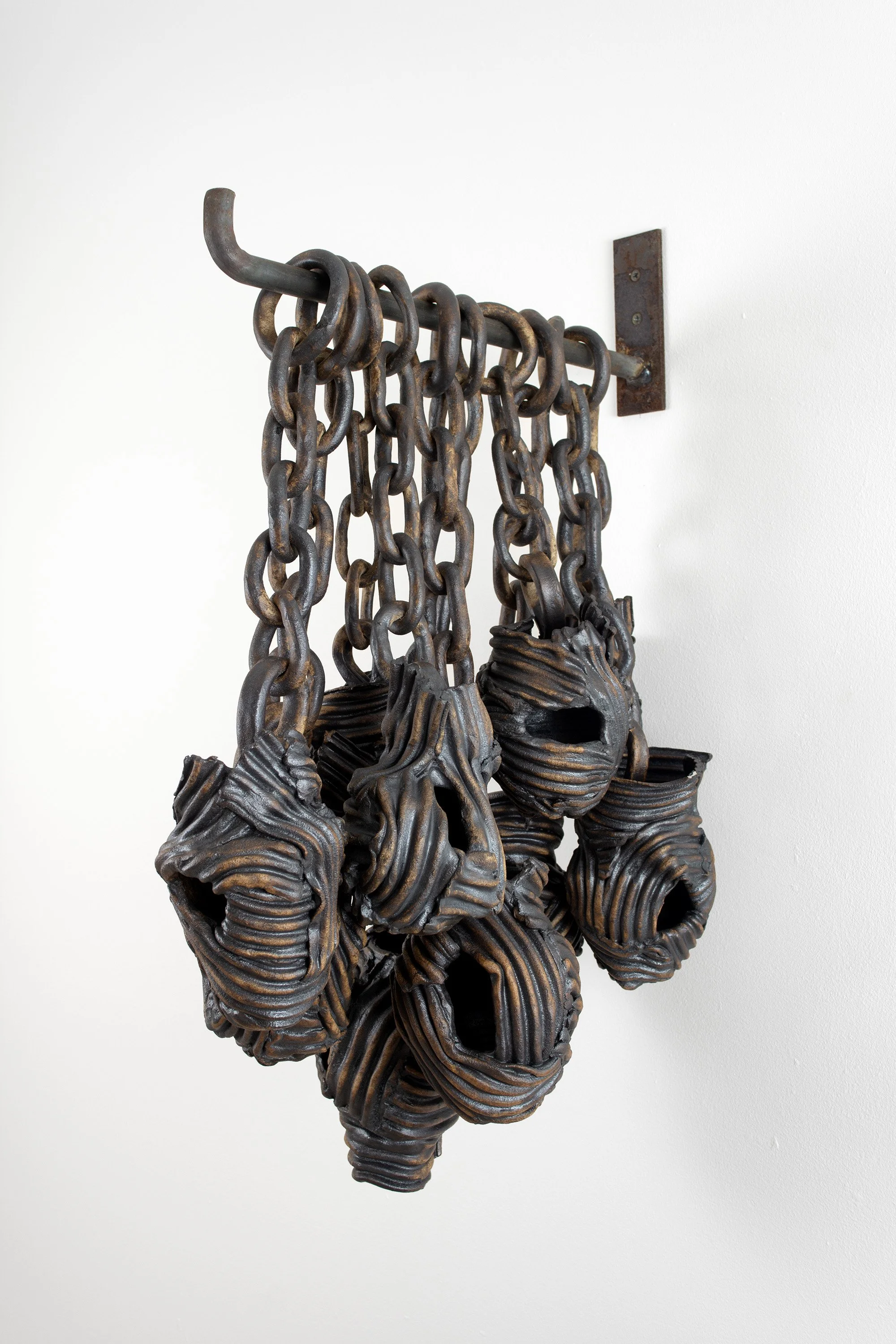
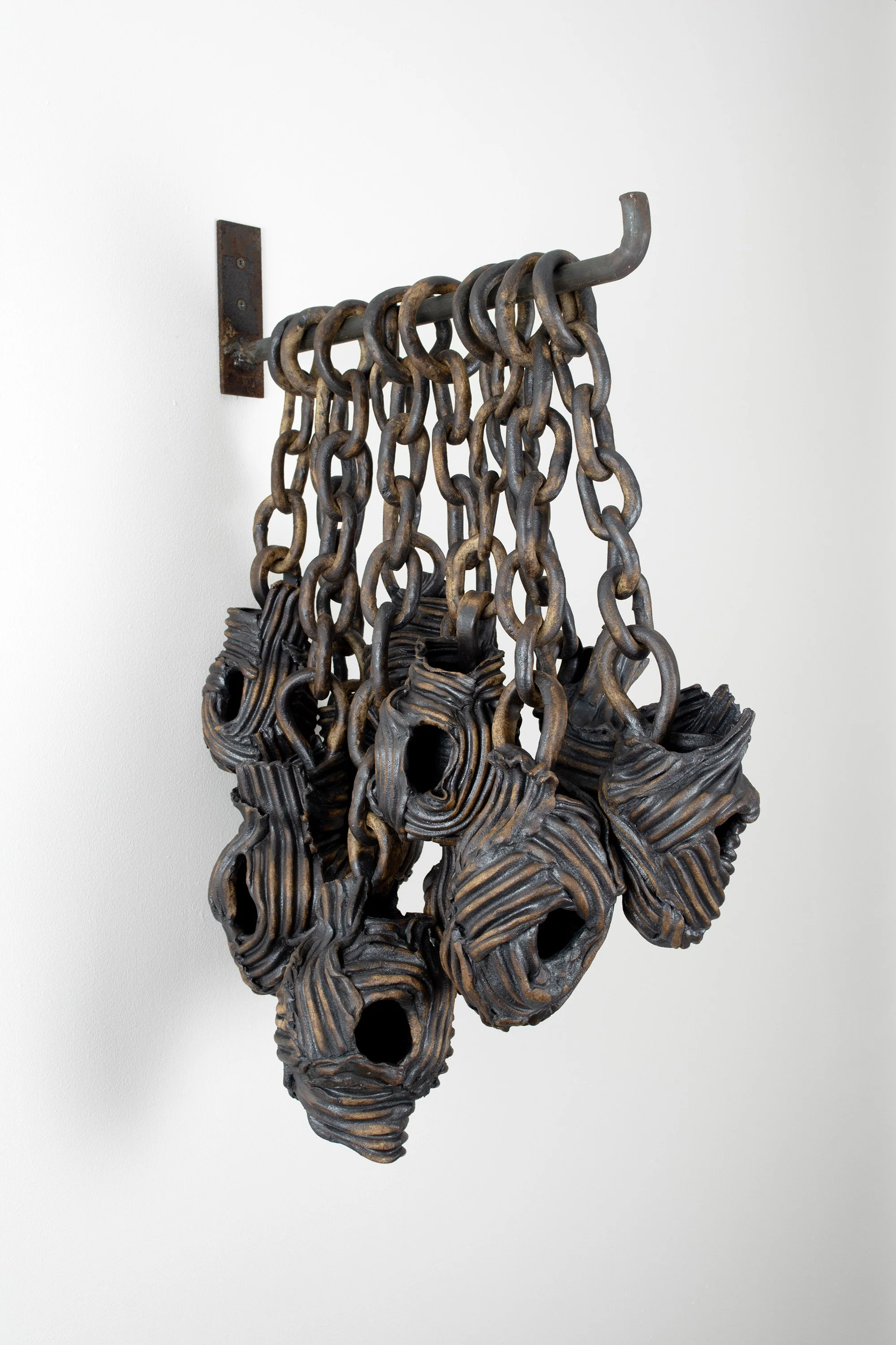
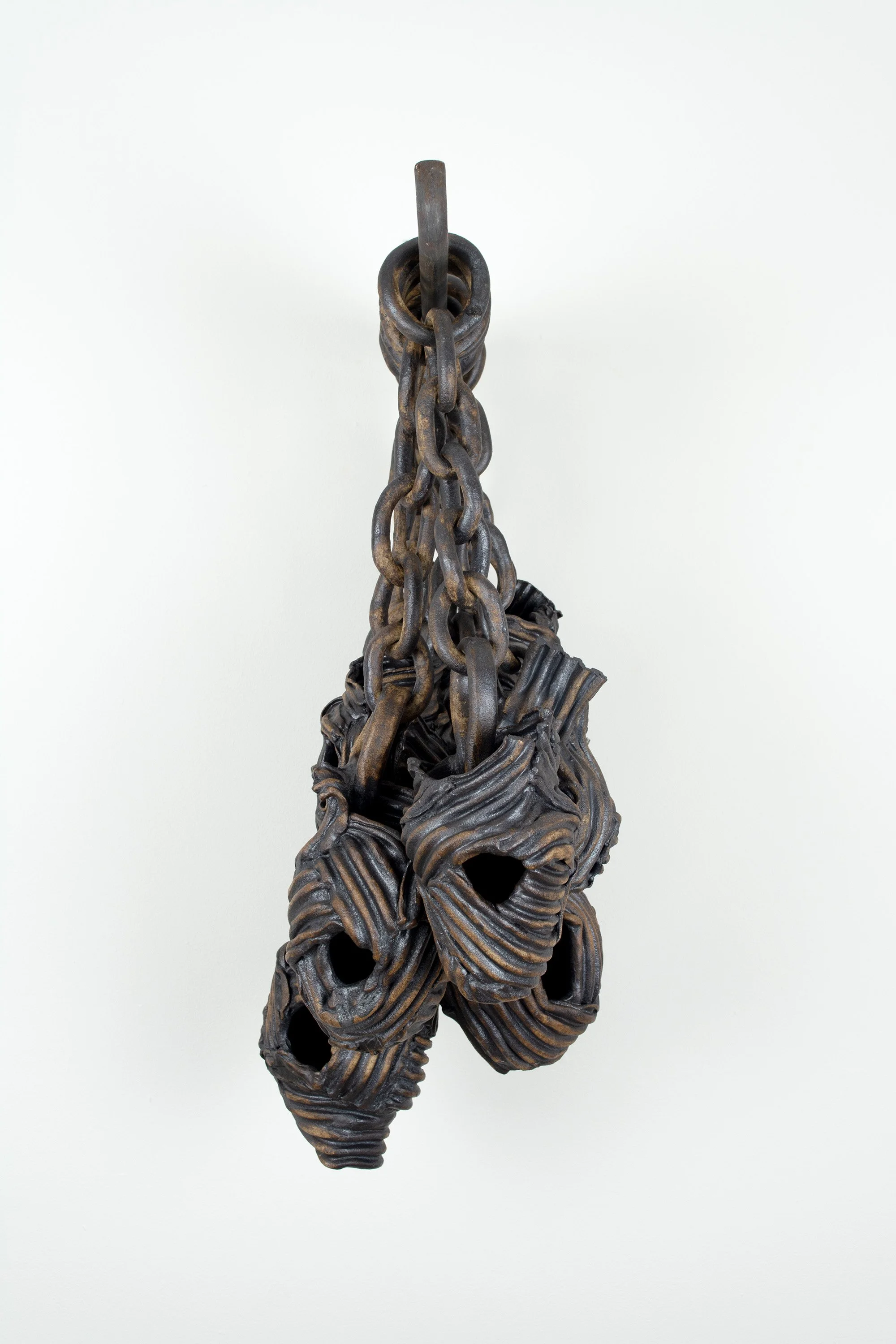
The works cluster in groups, almost like keepsakes or travelling companions - objects that might be carried, gathered, or passed between people. They hold a sense of journeying, of temporary settlement, and of disparate feelings coming together. This project extends the research begun in Rapparee, using material form to think about movement, identity and the quiet negotiations of belonging.
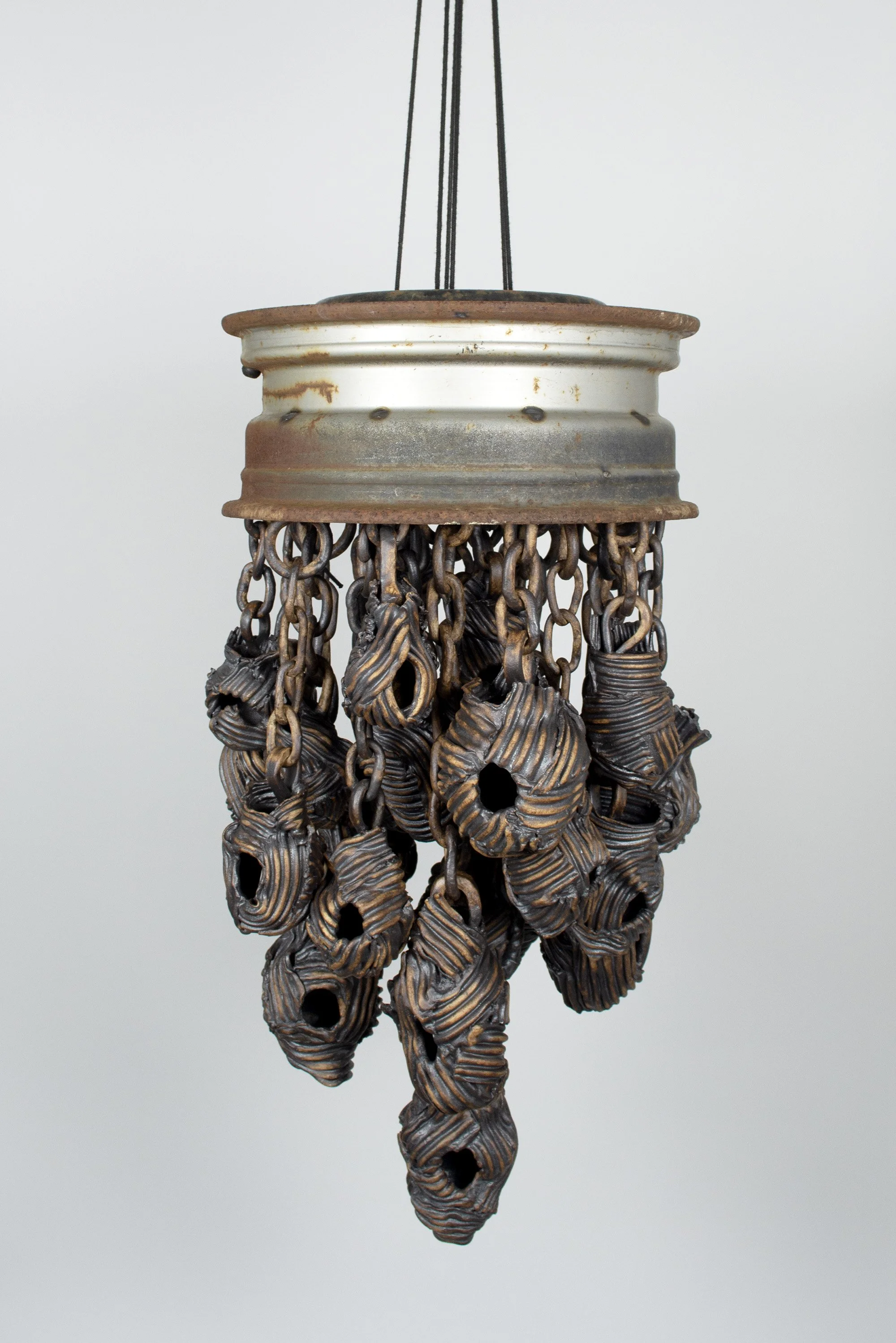
Roadside Picnic, Reduction fired stoneware with iron oxide, steel tyre rim, nylon rigging, H180 x W46 x D46cm, 2024
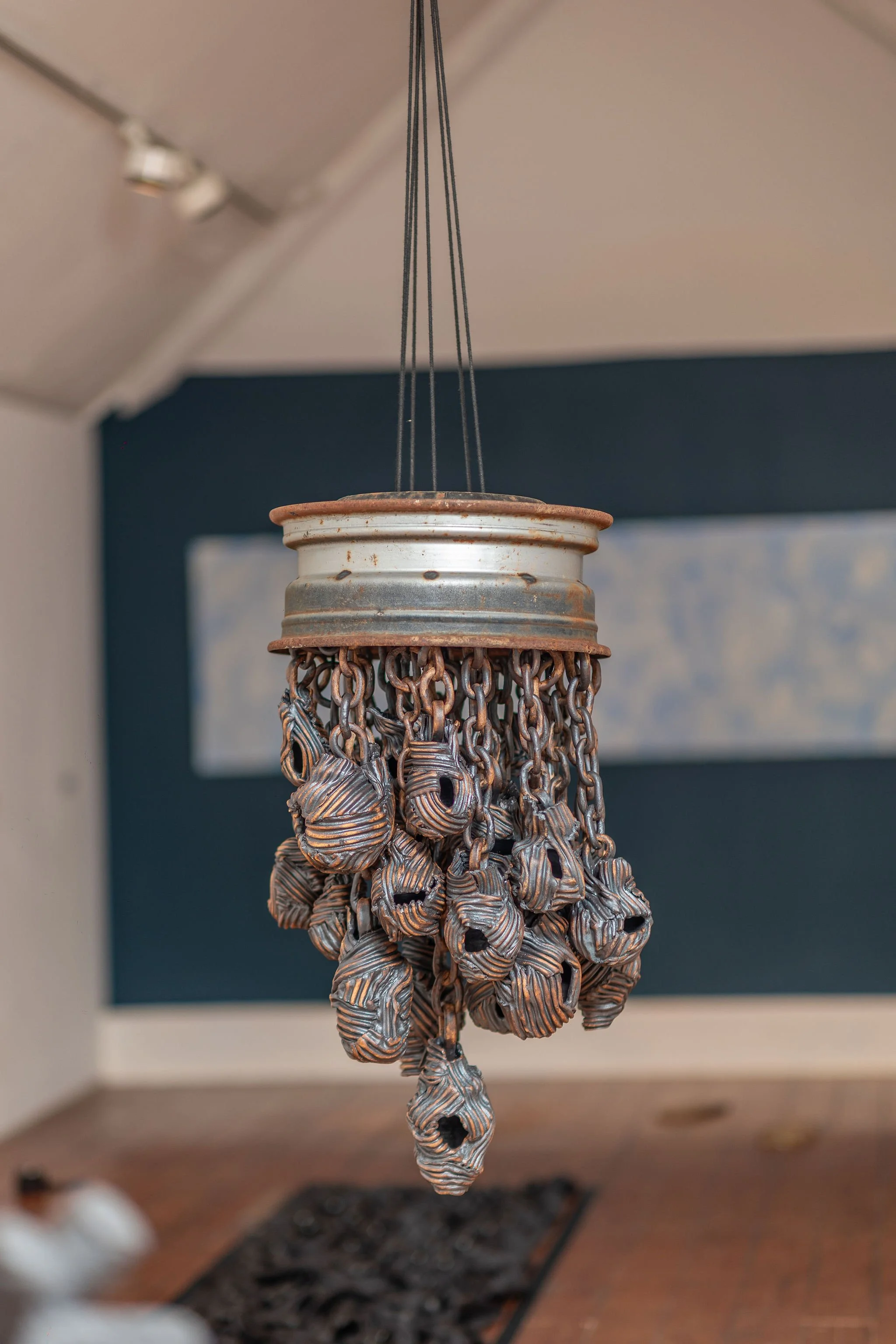
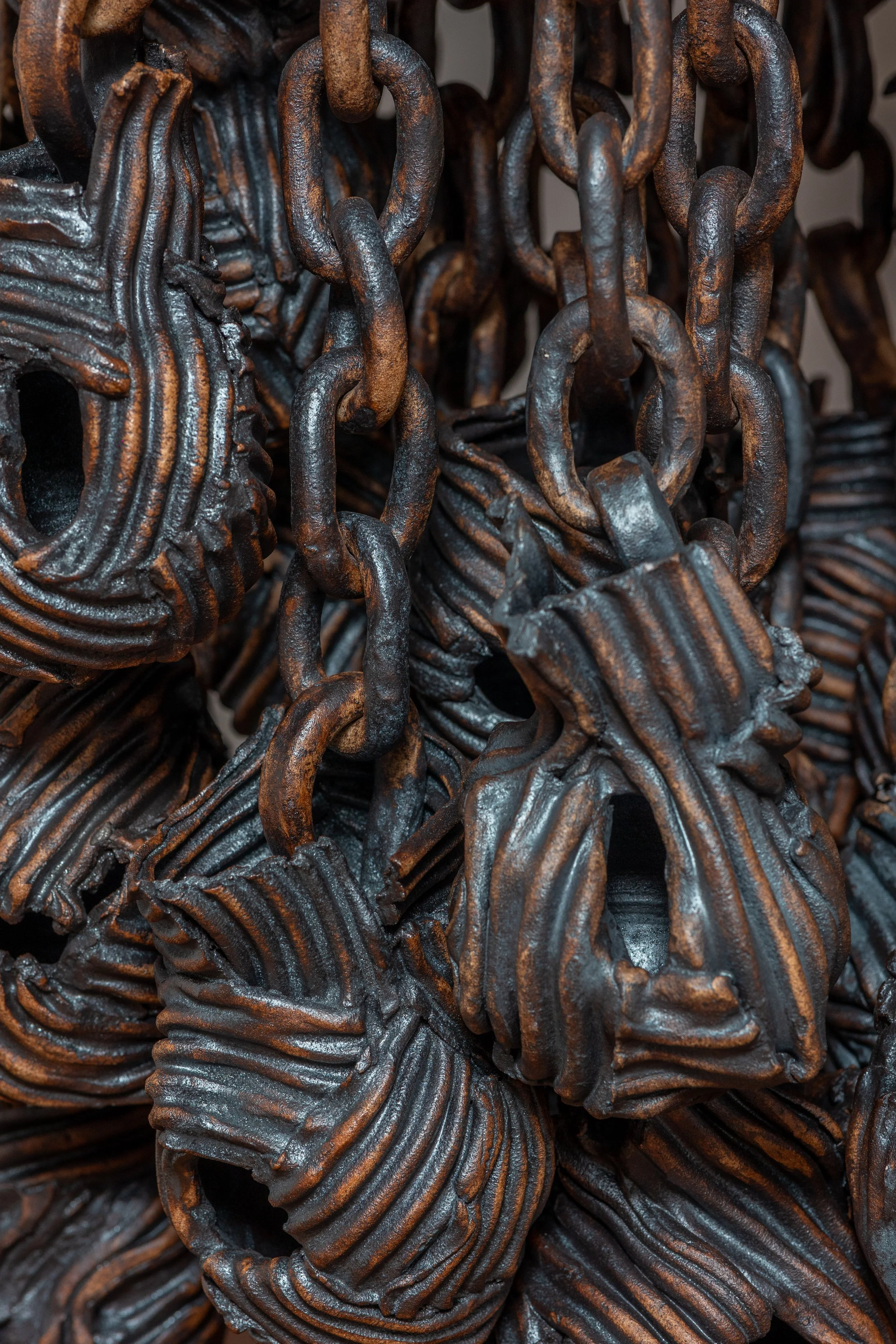
‘Roadside Picnic’, Stoneware ceramic, Iron oxide, theatre rigging, steel wheel hub, h180 x w46 x d46cm, 2024. Installation Royal Society of Sculptors, ‘Reality Check’ selected group show curated by David McAlmont
Roadside Picnic is an assemblage containing stoneware ceramic objects, a steel wheel hub and theatrical rigging. The sculpture takes as its starting point a picnic in some piece of wasteland, these nomads congregate under the shelter of the hub as a portent to those passing by.